Padel is growing faster in the United States than almost anywhere, and the clubs opening now are being built by people who have never run a racket sports facility before. That is not a criticism. It is the shape of a new market.
This is the order the decisions actually come in, and where the money goes wrong.
1. Decide what the club is before you decide where
There are three broadly different businesses hiding behind the phrase "padel club", and they need different sites, different pricing and different marketing.
- Pay and play. Court hire by the hour, minimal membership. Highest footfall, lowest loyalty, and you live or die on utilisation.
- Membership club. Recurring revenue, a community, and far more predictable cash. Harder to fill from a standing start.
- Hybrid with coaching and leagues. The model most successful clubs land on, because coaching converts first-timers and leagues give people a reason to return on a fixed day.
Pick before you sign a lease. The pay-and-play model wants passing trade and visibility. The membership model can live somewhere cheaper and less visible, because people come to it deliberately.
2. Site, and the measurement that kills deals
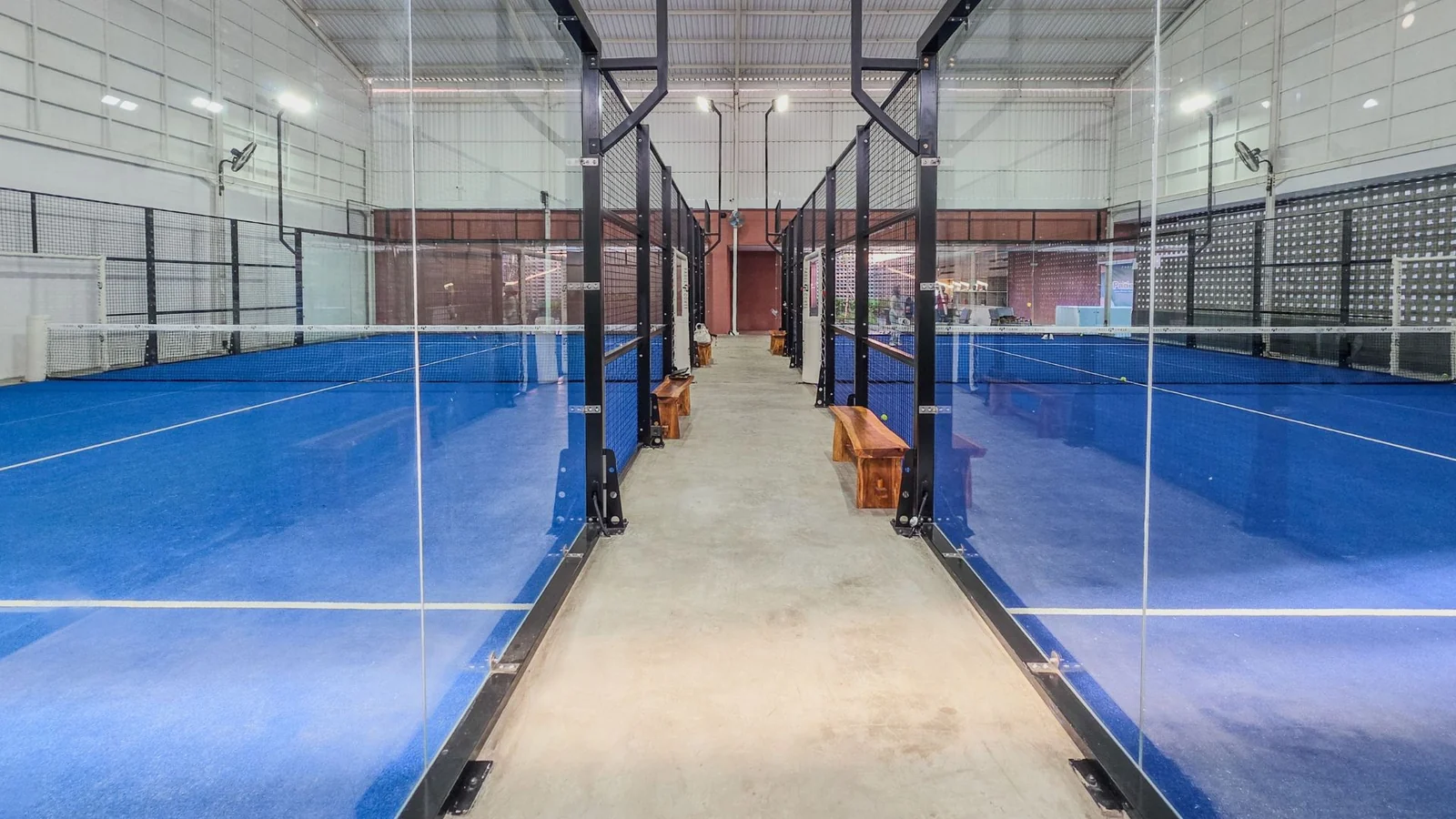
Courts are 20 by 10 metres, but the number that eliminates sites is height: six metres clear minimum above the court, eight recommended. Measure to the lowest sprinkler head or duct, not the roof.
Outdoors, you need drainage, permitting for the structure and lighting, and an honest view of how many playing hours your weather actually allows.
3. Budget the whole thing, not the courts
Expect roughly $50,000 to $100,000 per outdoor court, driven mostly by whether a sound slab already exists. Then add the things no court quote includes: booking software, insurance, utilities, staff or the automation that replaces them, and marketing.
Work out the court hours per week you need to sell to break even. That single number tells you more about whether the project works than any other figure in your spreadsheet.
4. Solve the quiet hours before you open
Every padel club in the world sells out 6pm to 9pm on weekdays. That is not a business, that is three hours a day.
The clubs that work have a deliberate answer for Tuesday at 11am before they open the doors:
- Daytime leagues and ladders for people with flexible hours
- Coaching blocks and beginner courses scheduled into the dead time
- Corporate and group bookings
- Off-peak membership priced to move, not priced for peak
- Juniors and schools during term-time afternoons
Retro-fitting demand into quiet hours after opening is considerably harder than designing for them from the start.
5. The website is a booking engine, not a brochure
The job of a padel club website is to turn a curious local into a booked court in as few taps as possible, on a phone, probably in the evening.
That means live availability rather than a contact form, membership prices visible rather than hidden behind an enquiry, and the coaching offer explained where a complete beginner can find it. Most padel club sites lose people at the booking step, not the homepage.
6. Open with demand already built
The worst version of a launch is finishing construction and then starting marketing. You carry the full cost of the facility while you build an audience from zero.
The better version starts three months before the courts are finished. Local search set up and indexed, the build documented on social so people watch it happen, a waiting list collecting names, and founding memberships sold before opening day.
A club that opens to a list of people who already want to play is a fundamentally different business to one that opens and hopes.
What we do and what we do not
We are a marketing agency. We do not build courts, pour slabs or supply glass, and we have no interest in pretending otherwise.
What we do is the part that starts once the courts are up: the website people book through, the local search that makes the club findable, the content that fills the quiet hours and the campaigns that sell memberships. If you are at the planning stage and want to talk through the demand side before you commit, that conversation is free and takes 15 minutes.