Most padel club websites look fine. Good colours, decent photos, a modern layout. Then you look at what they actually produce and they quietly fail at the one job they have, which is turning a visitor into a booking.
That gap is the whole subject of this guide. It covers what makes an existing club website convert, and what a club opening in the next six months needs online before the doors do.
Design does not fill courts. Decisions do.
Most club websites are built like brochures. They show the courts, list the prices and explain what padel is. What they do not do is move a visitor towards a decision.
A website that converts answers three questions in the first few seconds:
- Who is this for?
- Why book here rather than the club down the road?
- What do I do next?
If those answers are not obvious, people leave. Not because they are uninterested in padel, but because the site makes them work and they have something else to do.
Lead with the experience, not the facilities
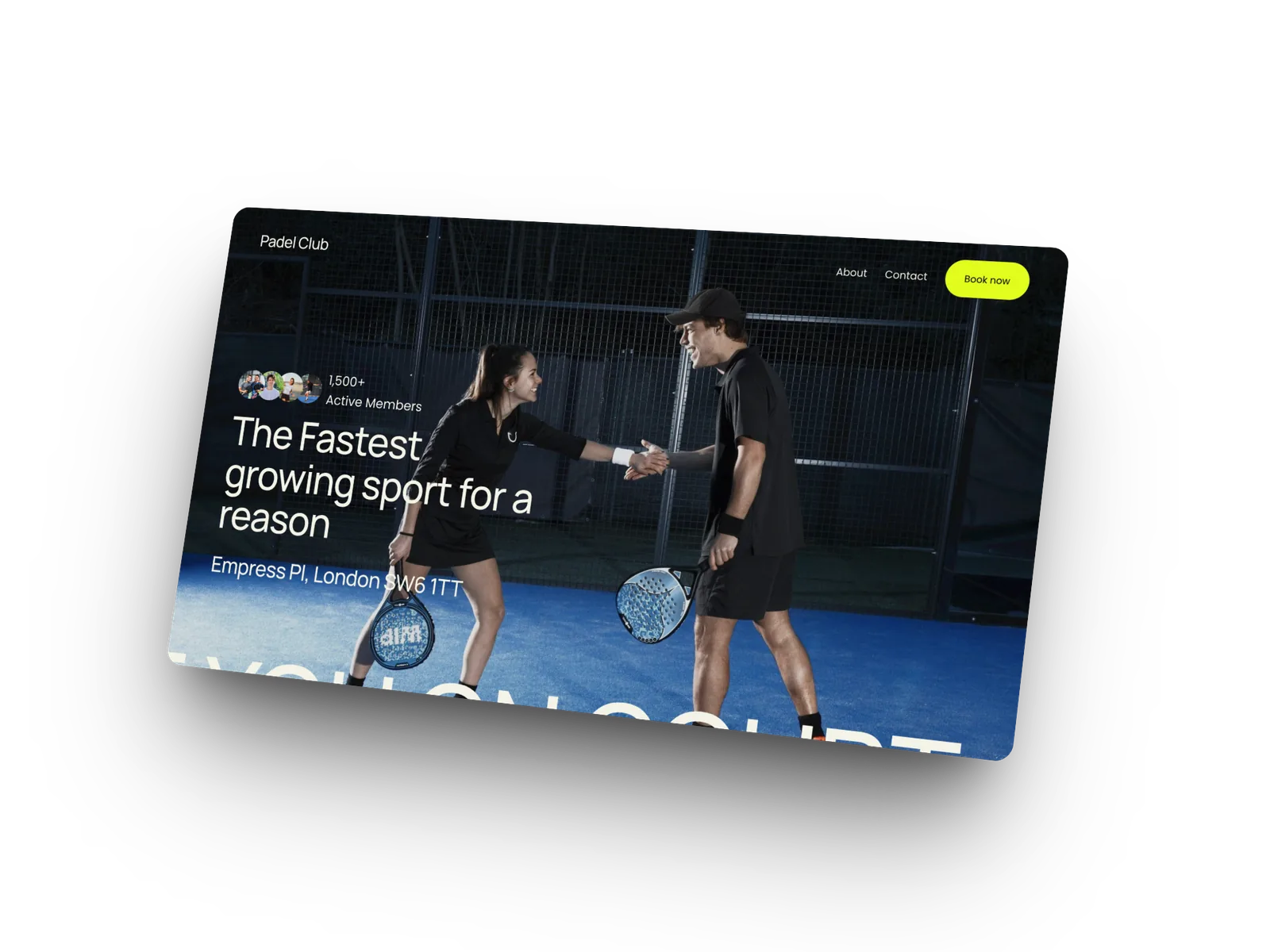
Courts, rackets and booking systems matter, and they come second. What makes someone book is seeing the atmosphere, the community and people recognisably like them enjoying it.
This is where real photography and video earn their cost. A site that shows what it feels like to play at your club outperforms one leaning on stock images and paragraphs of text, because the visitor can picture themselves there. Clubs that film one good session and use it properly across the website get more from it than clubs that spend the same money on another redesign.
Simplicity beats features
Over-complication is the most common fault we see. Several menus, long explanations, too many options, and a visitor who has to think about where to click next.
A site that converts keeps to:
- One clear primary action, repeated
- Separate, obvious paths for members and for people who have never played
- The fewest possible steps between landing and booking
Over 70% of your visitors are on a phone. If the booking button is awkward on mobile, you are losing players every day and the analytics will not tell you, because people who give up do not leave a trace worth reading.
Off-peak bookings are designed, not hoped for
The better sports facility websites do not treat every booking the same. They steer people towards the quieter sessions, the beginner slots and social play, using clear session types, plain explanations for new players, and language that removes the intimidation a first-timer feels.
Done properly this does not just raise the number of bookings. It changes when they land, which is the number that actually decides whether a club is profitable. A club full at 7pm and empty at 11am has a utilisation problem, not a demand problem, and the website is the cheapest place to start fixing it.
If you are opening a new club, start before the doors do
A launch does not start on opening day. It starts online, weeks or months earlier, and the clubs that leave it until the courts are built spend their first quarter catching up.
Imagine opening and then someone in your town searches for padel near them. You are not on Google and you are not on Maps. This happens constantly to new clubs, because a site published a fortnight before opening has not had time to be crawled, indexed or trusted.
What a pre-launch site needs to do:
- Exist early enough for Google to find and index it
- Collect a waiting list, so opening week is not a standing start
- Sell founding memberships before there is anything to use them on
- Look established enough that coaches, sponsors and partners take you seriously
Players judge a club before they ever walk in, and the website is what they judge it on. An outdated, slow or confusing site tells them the club will be the same.
Search brings the traffic. The site decides what happens next.
Ranking is half the job. We have seen padel and local sports sites rank well and still underperform, because the page they arrive on does not convert. The reverse is just as common: a beautifully built site nobody can find.
The two have to be built together. Search-optimised pages bring the right people in, conversion-focused layouts turn them into bookings. Treating SEO as something applied afterwards is how you end up paying twice.
Practically, that means a page for each thing you sell rather than one page listing all of it: court hire, coaching, leagues, memberships, corporate days. Each one can rank for its own search, and each gives an ad somewhere specific to land.
What a padel club website actually needs
- Shows the experience, in real images, not stock
- Makes booking feel like nothing
- Speaks to beginners as clearly as it speaks to regulars
- Loads fast and works properly on a phone
- Is structured for search from the start
- Sends people into whatever booking system you already run, rather than asking you to change it
Frequently asked questions
Does a padel club need its own website if it uses Playtomic?
Yes. A booking system takes a booking from someone who has already decided. It does not rank for searches, it does not explain why your club rather than another, and it does not sell a membership to someone who has never played. The website does that, then hands people to the booking system.
How long before opening should a new club's website go live?
Three months is comfortable, six is better. Indexing and trust take time, and a waiting list built over a quarter is worth more than an opening-week discount.
Why does our site get traffic but no bookings?
Usually because the booking path is too long, the mobile layout buries the action, or the page answers what padel is rather than why this club. Check what proportion of visitors reach the booking step at all before changing anything else.
Should off-peak prices be shown on the website?
Show them. Hiding prices loses more bookings than a low price ever costs you, and visible off-peak rates are what move a flexible player out of your busiest hour.